Website - www.thirasystems.com
Email me - gins@thirasystems.com
Follow me on twitter - @daveginsburg

Sunday, June 22, 2014

Big Data and Big Retail (23 June 2014 by gins)

Big Data and Big Retail (23 June 2014 by gins)

It is common to speak of the differences between 'bricks and mortar,' aka Main Street, and the Internet economy.   And much has been written about the ascendancy of Amazon and other Internet retailers, and the difficulties faced by the corner retail store and even category killers like Staples and BestBuy.   But why do the Amazon's of the world succeed?   

We live in the era of Big Data, where our lives are one with the cloud, where Siri is at our beck and call, and where retailers understand our deepest purchasing secrets.  The real face of the cloud are the massive data centers run by the likes of Apple and Google, or independent operators such as Equinix.   They look pretty cool, with aisles of servers, storage, networking gear, and the necessary power and cooling.  And, in the case of Google, a vision out of the Color Kittens.   But in the end, it is all just bits.


Overhead Data Center View


Google Data Center Racks

Now, what if the real secret of retail going forward is to just treat products as bits.  And remember, I'm not talking about items that have already crossed the chasm from physical to digital, such as videos or books.  The warehouse now looks much like a data center, and just as you have complete and storage, the whole fulfillment chain is organized in the same way.  Who cares if instead of a few microns of flash it is a few inches on a shelf.  

It is the era of 'Big Retail', where the corner store has been virtualized to a shelf in million square foot warehouse (much like a process on a VM in the networking world).  The latest Amazon distribution centers are the best examples of this, but I'd expect other retailers to follow suit.  In fact, the way it is described, there is no logical connection between a given product and a location in the warehouse... when it is time to ship, the system determines the 'closest' instance of the product.   No different than in a data center with data replicated closer to a given compute element.  The parallels are scary.  But in a good way.


Overhead Amazon Warehouse View

Amazon Warehouse Racks


Wednesday, April 23, 2014

Taking the Human out of the Loop, or Give My Regards to Captain Dunsail (by gins, 23 Apr 14)

Taking the Human out of the Loop, or Give My Regards to Captain Dunsail (by gins, 23 Apr 14)

Almost every week we read of another disaster, and all too often, the cause is not mechanical, but human - a cruise ship off Italy, a jet over the Indian Ocean, and more recently, a ferry off the coast of Korea.   Closer to home, and covered only by the local papers, are the ones that impact our local communities - a highway fatality, or an amber alert.   As a society, we run a fine balance between autonomy and control, between the value of a human life and the power of technology to protect it.   But what if we’ve now reached an inflection point, where the machine, and by extension, the Internet of Things, is now ready to become our protector?  Where we now have the ability to secure our skies, our waters, and even our highways and schools.  Sure, there are times when the machines fail, but this is more the exception, and the odds that the human may fail in judgment are in fact far greater.

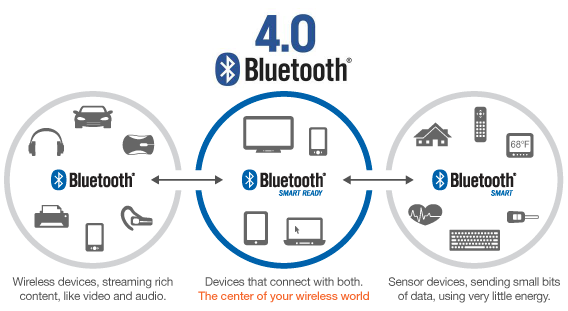
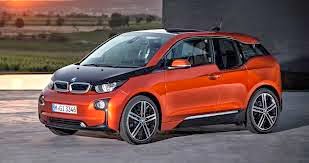
The technologies are available today – just look at Google’s autonomous vehicles and the states that have embraced them, jets that can land on their own and the transition of global navigation to GPS, and sensors that can track people and objects based on Bluetooth Low Energy, ensuring that your loved ones have arrived safely at school.  In fact, I’m taking delivery shortly of a BMW i3 that includes something called Active Driving Assistant and Active Cruise Control, as well as other under-the-hood Teutonic magic.  On my way into work, it will vibrate if I’ve left a lane, brake I’m too close to the car in front of me (even if distracted), and even warn me if a pedestrian crosses my path.   Not quite Google, but a heck of a lot cheaper!

BMW Active Driving Assistant

Bluetooth 4.0 Low Energy - Internet of Things

Google
BMW i3


Are we giving up that much by turning over control to something that doesn’t get tired, stress-out over the kids, get overly emotional, and can react in a millisecond?   Throughout history, humans have embraced technology – fire, plumbing, steam, electricity, and modern medicine.   Isn’t this just the next logical step?   We’re not talking about a world of Skynet, ARIAA, and the M-5, but if you ask anyone who has experienced some form of calamity firsthand, I’m sure you’d get no pushback.

M-5


Thursday, February 27, 2014

Kids and Gadgets Redux (by gins, 27 Feb 2014)

Kids and Gadgets Redux (by gins, 27 Feb 2014)

So i had the pleasure ;) of taking my kids to Miley Cyrus last night.   The show notwithstanding, what was really interesting was just how they and everyone around us (mainly high-schoolers) were glued to their phones through the performance.   We were surrounded by texting, Instagraming, Facebook posting, and endless hours of video capture.   It got me thinking.... we used to talk about "being in the moment."  That capturing life through a lens was something less than real.   However... they were in 'their' moment, and if that is their reality, who am I to judge.


A sea of phones... remember lighters?


Top Apps at Sochi - view into social media (by gins, 27 Feb 2014

Top Apps at Sochi - view into social media 
(by gins, 27 Feb 2014)


Sunday, February 23, 2014

Kids and Gadgets (by gins, 23 Feb 2014)

A recent CNET article hit close to home in articulating just how much kids have changed in only the last five years.  We have two daughters, ages 9 and 11, and they had just passed preschool when the first iPads were released.  Nevertheless, it took no time at all for each to adopt their own (or was it the other way around?).  Applications consisted of both casual games and those that included logic and learning.  And yes, I place 'The Room' in this latter category.  Fast forward to this past year, and they each have iPhones, and both live parts of their lives (and those of their friends) via Instagram and messaging.  Not necessarily a bad thing, though my oldest daughter had upwards of 1500 texts last month.  The flip-side of this... despite what seems to be an engineered after-school experience, they definitely interact more (in person) with their classmates and have plenty of opportunity to burn off excess energy as part of their dance activities.  More than I had at times.  Weekends are for cocooning, but that could be the tradeoff.  So is it bad or good?   Just different, and the new reality in the valley.


Tuesday, February 11, 2014

Gartner on IOT (by gins, 11 Feb 2014)

Gartner Says the Internet of Things Installed Base Will Grow to 26 Billion Units By 2020

The Internet of Things (IoT), which excludes PCs, tablets and smartphones, will grow to 26 billion units installed in 2020 representing an almost 30-fold increase from 0.9 billion in 2009, according to Gartner, Inc. Gartner said that IoT product and service suppliers will generate incremental revenue exceeding $300 billion, mostly in services, in 2020. It will result in $1.9 trillion in global economic value-add through sales into diverse end markets. 
The Internet of Things is the network of physical objects that contain embedded technology to communicate and sense or interact with their internal states or the external environment. 
"The growth in IoT will far exceed that of other connected devices. By 2020, the number of smartphones tablets and PCs in use will reach about 7.3 billion units," said Peter Middleton, research director at Gartner. "In contrast, the IoT will have expanded at a much faster rate, resulting in a population of about 26 billion units at that time." 
Due to the low cost of adding IoT capability to consumer products, Gartner expects that "ghost" devices with unused connectivity will be common. This will be a combination of products that have the capability built in but require software to "activate" it and products with IoT functionality that customers do not actively leverage. In addition, enterprises will make extensive use of IoT technology, and there will be a wide range of products sold into various markets, such as advanced medical devices; factory automation sensors and applications in industrial robotics; sensor motes for increased agricultural yield; and automotive sensors and infrastructure integrity monitoring systems for diverse areas, such as road and railway transportation, water distribution and electrical transmission. 
"By 2020, component costs will have come down to the point that connectivity will become a standard feature, even for processors costing less than $1. This opens up the possibility of connecting just about anything, from the very simple to the very complex, to offer remote control, monitoring and sensing," said Mr. Middleton. "The fact is, that today, many categories of connected things in 2020 don't yet exist. As product designers dream up ways to exploit the inherent connectivity that will be offered in intelligent products, we expect the variety of devices offered to explode." 
The IoT encompasses hardware (the things themselves), embedded software, communications services and information services associated with the things. Gartner refers to the companies that provide the hardware, software and services as IoT suppliers. The incremental IoT supplier revenue contribution from IoT in 2020 is estimated at $309 billion. 
Economic value-add (which represents the aggregate benefits that businesses derive through the sale and usage of IoT technology) is forecast to be $1.9 trillion across sectors in 2020. The verticals that are leading its adoption are manufacturing (15 percent), healthcare (15 percent) and insurance (11 percent).
IoT value-add is composed of the combination of mature IoT, which is already yielding benefits, and a high-growth emerging IoT opportunity. It is derived from a combination of sector-specific technology (such as connected, automated manufacturing systems), and more generic, widely used technology, such as the suite of "smart building" technologies, including light-emitting diode (LED) lighting and smart HVAC systems. 
Emerging areas will witness rapid growth of connected things. This will lead to improved safety, security and loss prevention in the insurance industry. IoT will also facilitate new business models, such as usage-based insurance calculated based on real-time driving data. The banking and securities industry will continue to innovate around mobile and micropayment technology using convenient point-of-sale (POS) terminals and will invest in improved physical security systems. IoT will also support a large range of health and fitness devices and services, combined with medical advances, leading to significant benefit to the healthcare sector. Emerging connected sensor technology will lead to value creation in utilities, transportation and agriculture. Most industries will also benefit from the generic technologies, in that their facilities will operate more efficiently through the use of smart building technology. 
More detailed analysis is available in the report "Forecast: The Internet of Things, Worldwide, 2013." The report is available on Gartner's website at http://www.gartner.com/document/2625419?ref=QuickSearch&sthkw=G00259115.

Thursday, January 23, 2014

Let There Be Light Redux.... Pope Francis (by gins, 23 Jan 2014)

The Internet is a “gift from God” that facilitates communication, Pope Francis said in a statement released Thursday, but he warns that the obsessive desire to stay connected can actually isolate people from their friends and family.