Over 13 years ago my wife and I selected a Shakira song, 'Wherever Whenever,' as the first dance at our wedding. Shakira wasn't too well known outside of the Latino community at the time, but with my Miami roots, I guess I was closer to her scene. How times have changed with Pitbull (born in Miami) MC'ing the American Music Awards and Shakira now 2 for 2 with her incredibly popular 2010 and 2014 World Cup videos.
Having spent 12 years in Europe I felt a real affinity for the 'old country,' but the ties just aren't there any longer. Admittedly, I'm probably behind the times on this. Socially and economically, we need to embrace our hemisphere for what it is and chart our own destiny. Its not isolationism, but when people ask if my daughters will study French (my original option, and we in fact went through 3 years of French au-pairs) or Chinese (that would be an even bigger joke, given lack of any family connections whatsoever), the logical conclusion is Spanish.
Sure, as with any nation or continent, we experience boom and bust. But with less dependence on foreign energy and its baggage, less dependence on trade where the trade-off with some countries seems to be the willingness to take part in an unending cycle of intellectual theft cat-and-mouse, and home-grown ingenuity that manifests itself in places like Amazon's latest 'factories' - I don't know what else to call them - our future in the new year looks bright. I've just got to bone up on my language skills, something I've never been that great at.
Monday, December 22, 2014

Tuesday, October 14, 2014
Snapchat and my Daughters (14 Oct 14 by gins)
By now you've heard of the latest security breach - the Snapsaved (now shut down) Snapchat client hacked and hundreds of thousands of potentially damaging photos posted to 4chan. Now, although Snapchat itself was not the target, many, my daughters included, post to it, and to be honest, i don't know if they've been using the Snapsaved client (or some other client, yet to be hacked). My bad! But we do limit in-app purchases. The problem is that many of these casual applications are no-charge. And i'm sure that they don't read the small-print when downloading said applications, as to what is saved and what is not. Where to draw the line?
In a world where Instagram is the new clique, replacing clothes and what kind of house you live in, I can't really cut them off. But i can give my daughters, ages 10 and 11, guidance, beyond the standard school Internet good citizen briefing on content and bullying. Guidance that reflects more of the real world, like what happened to that unfortunate girl in Saratoga, just five miles from our house. And guidance that can be understood by a very distracted ten year-old.
1. Never post a picture or opinion that you'd not want to have viewed or read by a future employer, by college admission, or even by your close friends. I know we've heard all of this before. A scary statistic by the CTIA - 46% of adolescents, ages 11 to 17, have received a message or picture their parents would disapprove of due to sexual content.
2. The same applies for pictures or opinions of friends (or non-friends). What goes around comes around.
3. Never (ever) be put in a position where someone has the opportunity take a picture that you'd not want to see posted. Something to be said about a buddy system at parties, especially once they hit high school.
4. Never share private information. Once again, nothing new.
Over the last year, the CTIA has published some great infographics on www.growingwireless.com. Worth taking a look. And within the site, the resources page has a wealth of information spanning smartphone OSs and cellular providers.
Time to have that conversation!
Monday, August 25, 2014
Dystopia (25 Aug 2014 by gins)
I was thinking back on some of the recent movies i've seen.... Divergent, Lucy, The Giver... and I was thinking. Is it just me, or is there some trend? Best way to check is wiki. Since many movies are derived from novels, here are those tagged as 'dystopian' by decade, knowing that it is inexact since the more recent ones will have a higher probability of mention. But close.
decade number per year commentary
1900s 6 .6
1910s 4 .4
1920s 5 .5
1930s 17 1.7 depression? impending war?
1940s 14 1.4 war
1950s 16 1.6 de-humanizing technology?
1960s 22 2.2 war, environment
1970s 17 1.7
1980s 12 1.2 bit of a lull
1990s 13 1.3 same
2000s 52 5.2 better reporting, or our angst is growing
2010s 36 9.0 over only 4 years. what, me worry?
I can't draw any conclusions, but i'm thinking of moving to a small island in the South Pacific, though i worry about flies, polar bears, and those kids from Shiroiwa.
decade number per year commentary
1900s 6 .6
1910s 4 .4
1920s 5 .5
1930s 17 1.7 depression? impending war?
1940s 14 1.4 war
1950s 16 1.6 de-humanizing technology?
1960s 22 2.2 war, environment
1970s 17 1.7
1980s 12 1.2 bit of a lull
1990s 13 1.3 same
2000s 52 5.2 better reporting, or our angst is growing
2010s 36 9.0 over only 4 years. what, me worry?
I can't draw any conclusions, but i'm thinking of moving to a small island in the South Pacific, though i worry about flies, polar bears, and those kids from Shiroiwa.
Sunday, July 27, 2014
Quaint: The Red Envelope (27 Jul 14 by gins)
My last two postings on retail - Big Data and Big Retail, and Big Data and Big Retail Redux - had me thinking about another well-known company and its 'factories.' A decade from now, when you're trying to explain the original Netflix business model to your son or daughter...
See, they take movies that start out as just 'electronic' bits, and stamp them onto plastic disks. So the bits are now 'physical.' In large factories scattered across the country they then stuff these disks into paper envelopes, and send them on their way via planes and trucks, all using gasoline, until they arrive at the subscriber. She takes the plastic disk, puts it in a DVD player, and those physical bits are now converted back into electronic bits and displayed. When finished, she puts the disk back in the envelope, sending it back to the factory.
Yeah dad.... quit the BS.... people couldn't be <that> stupid.....
See, they take movies that start out as just 'electronic' bits, and stamp them onto plastic disks. So the bits are now 'physical.' In large factories scattered across the country they then stuff these disks into paper envelopes, and send them on their way via planes and trucks, all using gasoline, until they arrive at the subscriber. She takes the plastic disk, puts it in a DVD player, and those physical bits are now converted back into electronic bits and displayed. When finished, she puts the disk back in the envelope, sending it back to the factory.
Yeah dad.... quit the BS.... people couldn't be <that> stupid.....
 |
| Physical Bits on DVD |
 |
| From Netflix |
 |
| From Netflix |
Sunday, June 22, 2014
Big Data and Big Retail (23 June 2014 by gins)
Big Data and Big Retail (23 June 2014 by gins)
It is common to speak of the differences between 'bricks and mortar,' aka Main Street, and the Internet economy. And much has been written about the ascendancy of Amazon and other Internet retailers, and the difficulties faced by the corner retail store and even category killers like Staples and BestBuy. But why do the Amazon's of the world succeed?
We live in the era of Big Data, where our lives are one with the cloud, where Siri is at our beck and call, and where retailers understand our deepest purchasing secrets. The real face of the cloud are the massive data centers run by the likes of Apple and Google, or independent operators such as Equinix. They look pretty cool, with aisles of servers, storage, networking gear, and the necessary power and cooling. And, in the case of Google, a vision out of the Color Kittens. But in the end, it is all just bits.
Now, what if the real secret of retail going forward is to just treat products as bits. And remember, I'm not talking about items that have already crossed the chasm from physical to digital, such as videos or books. The warehouse now looks much like a data center, and just as you have complete and storage, the whole fulfillment chain is organized in the same way. Who cares if instead of a few microns of flash it is a few inches on a shelf.
It is the era of 'Big Retail', where the corner store has been virtualized to a shelf in million square foot warehouse (much like a process on a VM in the networking world). The latest Amazon distribution centers are the best examples of this, but I'd expect other retailers to follow suit. In fact, the way it is described, there is no logical connection between a given product and a location in the warehouse... when it is time to ship, the system determines the 'closest' instance of the product. No different than in a data center with data replicated closer to a given compute element. The parallels are scary. But in a good way.
It is common to speak of the differences between 'bricks and mortar,' aka Main Street, and the Internet economy. And much has been written about the ascendancy of Amazon and other Internet retailers, and the difficulties faced by the corner retail store and even category killers like Staples and BestBuy. But why do the Amazon's of the world succeed?
We live in the era of Big Data, where our lives are one with the cloud, where Siri is at our beck and call, and where retailers understand our deepest purchasing secrets. The real face of the cloud are the massive data centers run by the likes of Apple and Google, or independent operators such as Equinix. They look pretty cool, with aisles of servers, storage, networking gear, and the necessary power and cooling. And, in the case of Google, a vision out of the Color Kittens. But in the end, it is all just bits.
 |
| Overhead Data Center View |
 |
| Google Data Center Racks |
Now, what if the real secret of retail going forward is to just treat products as bits. And remember, I'm not talking about items that have already crossed the chasm from physical to digital, such as videos or books. The warehouse now looks much like a data center, and just as you have complete and storage, the whole fulfillment chain is organized in the same way. Who cares if instead of a few microns of flash it is a few inches on a shelf.
It is the era of 'Big Retail', where the corner store has been virtualized to a shelf in million square foot warehouse (much like a process on a VM in the networking world). The latest Amazon distribution centers are the best examples of this, but I'd expect other retailers to follow suit. In fact, the way it is described, there is no logical connection between a given product and a location in the warehouse... when it is time to ship, the system determines the 'closest' instance of the product. No different than in a data center with data replicated closer to a given compute element. The parallels are scary. But in a good way.
 |
| Overhead Amazon Warehouse View |
 |
| Amazon Warehouse Racks |
Wednesday, April 23, 2014
Taking the Human out of the Loop, or Give My Regards to Captain Dunsail (by gins, 23 Apr 14)
Taking the Human out of the Loop, or Give My Regards to Captain Dunsail (by gins, 23 Apr 14)
Almost every week we read of another disaster, and all too often, the cause is not mechanical, but human - a cruise ship off Italy, a jet over the Indian Ocean, and more recently, a ferry off the coast of Korea. Closer to home, and covered only by the local papers, are the ones that impact our local communities - a highway fatality, or an amber alert. As a society, we run a fine balance between autonomy and control, between the value of a human life and the power of technology to protect it. But what if we’ve now reached an inflection point, where the machine, and by extension, the Internet of Things, is now ready to become our protector? Where we now have the ability to secure our skies, our waters, and even our highways and schools. Sure, there are times when the machines fail, but this is more the exception, and the odds that the human may fail in judgment are in fact far greater.
Almost every week we read of another disaster, and all too often, the cause is not mechanical, but human - a cruise ship off Italy, a jet over the Indian Ocean, and more recently, a ferry off the coast of Korea. Closer to home, and covered only by the local papers, are the ones that impact our local communities - a highway fatality, or an amber alert. As a society, we run a fine balance between autonomy and control, between the value of a human life and the power of technology to protect it. But what if we’ve now reached an inflection point, where the machine, and by extension, the Internet of Things, is now ready to become our protector? Where we now have the ability to secure our skies, our waters, and even our highways and schools. Sure, there are times when the machines fail, but this is more the exception, and the odds that the human may fail in judgment are in fact far greater.
The technologies are available today – just look
at Google’s autonomous vehicles and the states that have embraced them, jets
that can land on their own and the transition of global navigation to GPS, and
sensors that can track people and objects based on Bluetooth Low Energy,
ensuring that your loved ones have arrived safely at school. In fact, I’m
taking delivery shortly of a BMW i3 that includes something called Active
Driving Assistant and Active Cruise Control, as well as other under-the-hood Teutonic
magic. On my way into work, it will vibrate if I’ve left a lane, brake
I’m too close to the car in front of me (even if distracted), and even warn me
if a pedestrian crosses my path. Not
quite Google, but a heck of a lot cheaper!
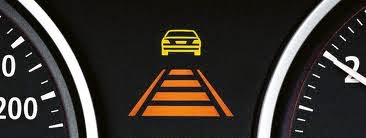 |
| BMW Active Driving Assistant |
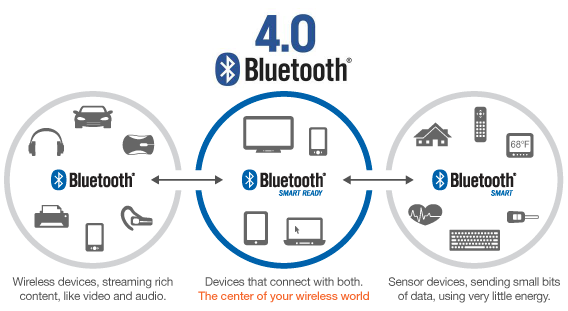 |
| Bluetooth 4.0 Low Energy - Internet of Things |
 |
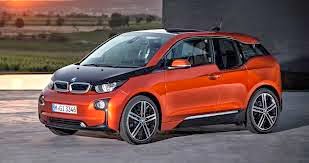 |
| BMW i3 |
Are we giving up that much by turning over control to something that doesn’t get tired, stress-out over the kids, get overly emotional, and can react in a millisecond? Throughout history, humans have embraced technology – fire, plumbing, steam, electricity, and modern medicine. Isn’t this just the next logical step? We’re not talking about a world of Skynet, ARIAA, and the M-5, but if you ask anyone who has experienced some form of calamity firsthand, I’m sure you’d get no pushback.
 |
| M-5 |
Subscribe to:
Posts (Atom)